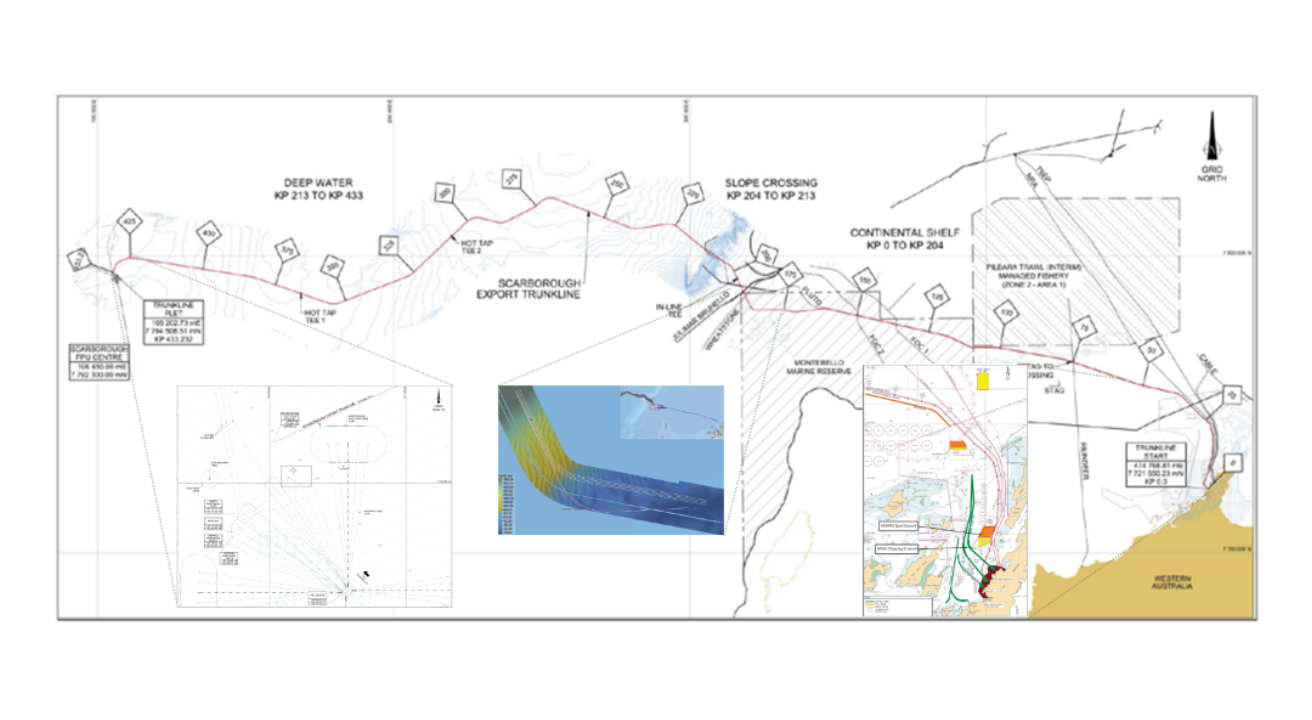
The hybrid 36-inch/32-inch pipeline configuration, in water depths exceeding 1400m, traverses the continental slope (scarp), crossing multiple pipeline assets, shipping channels, including in-line structures and PLET structure in deepwater.
SEA Global delivered an optimised routing for the 433km long export trunkline to minimise risks from metocean, geotechnical and installation activities, and reduce construction complexity and cost. The work also included designing seabed intervention, secondary stabilisation, and mechanical protection using a conventional combination of trenching, sand backfilling and rock dumping. Furthermore, the team executed pipeline mechanical design to manage thermal expansion, developed solutions for multiple third-party asset crossings, designed optimized paths through bottom roughness at 600m water depth, and provided technical assurance during procurement, installation, and dry pre-commissioning.
Pipeline Length
433 km
Pipeline Diameter
Hybrid configuration: 36-inch (shallow) & 32-inch (deep)
Operating Pressure
242 bara at +30m MSL
Shore Crossing
Trenched Shore pull
Scarp Crossing Water Depths
to 1,400m
Crossings
7-off Third party crossings
Scope of Work
Route Design
Delivered an optimised routing for the 433km long export trunkline to minimise risks from metocean, geotechnical and installation activities, and reduce construction complexity and cost.
Seabed Intervention & Shore Crossing
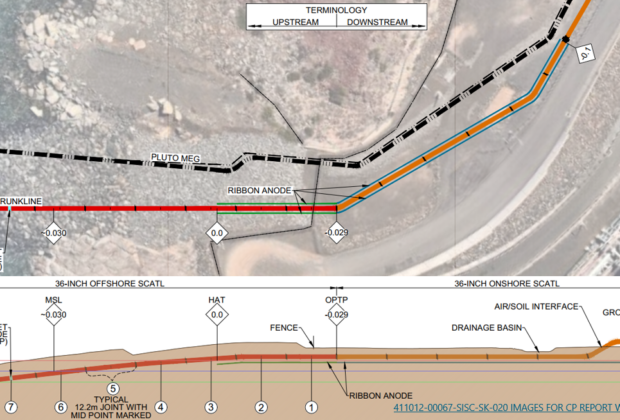
Designed the seabed intervention, secondary stabilisation and mechanical protection required for the pipeline between the onshore termination and the 50 m water mark. This included the shore crossing, shipping channel crossing and trench exit to seabed using a conventional combination of trenching, sand backfilling and rock dumping
Mechanical Engineering
Delivered pipeline mechanical design, including the mitigation strategy to manage thermal expansion at the PLET Approach in deep water.
Third Party Crossings
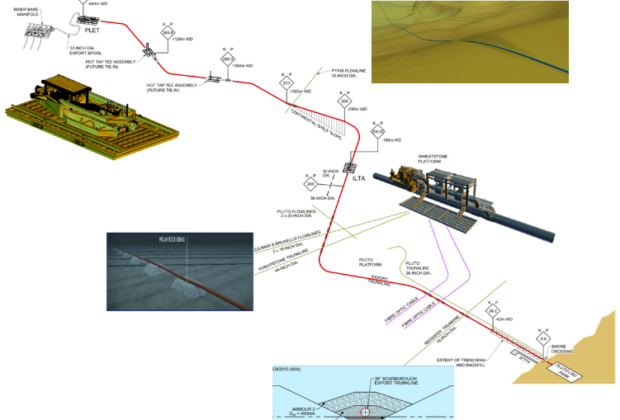
Design of multiple third-party assets crossings and provided support during the execution phase.
Slope Crossing and Geohazards
Design of an optimised route through the challenging slope crossing region. Evaluation of the interaction of the trunkline with slope geohazards, on-bottom roughness and slope crossing design. Seabed excavation interventions, at 600m water depth, were designed to mitigate the most significant bottom roughness conditions.
Technical Assurance
SEA provided technical assurance during the procurement, seabed intervention works, pipeline installation and ensuring compliance with the Dry Pre-Commissioning (FCGT Replacement) requirements.