
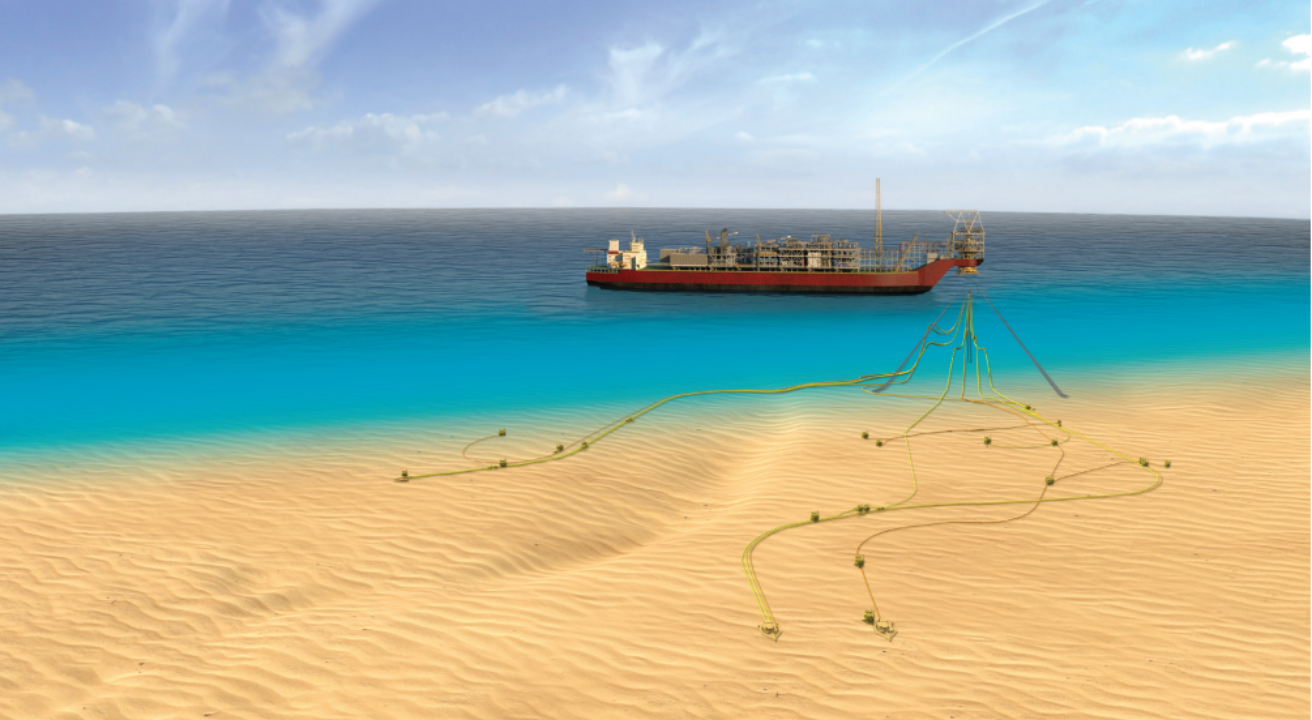
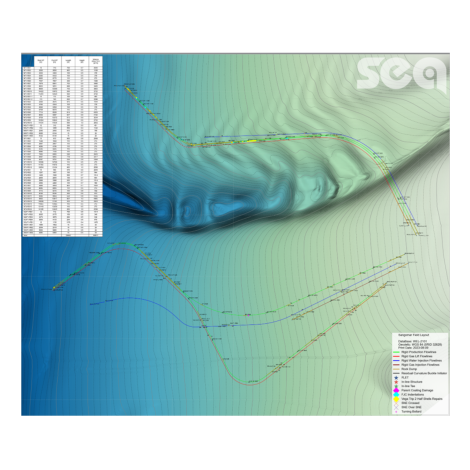
SEA Global developed a digital representation of the Sangomar subsea production and injection system, integrating design, manufacturing, installation, and operational data to support integrity management, inspection planning, life-extension, and efficient engineering assessment across the asset lifecycle.
The work evaluated thermal buckling and axial walking behaviour using 3D modelling and transient load analysis to verify reliability and confirm maintainability for a field utilizing the novel residual curvature method for planned global buckling response. The scope also involved performing large-scale parametric FE analyses to assess structure displacement limits and tie-in performance under installation and operational loads, pipeline route updates, walking mitigation refinement, and rapid re-designs in response to wellhead location changes. Furthermore, the team managed subsea as-built data from ROV and AUV surveys, established a measurement framework to improve FLET/ILT/ILS accuracy, validated contractor data, and tracked early-life system performance against design expectations using ROV GVI recordings, marker interpretations, and temperature/pressure monitoring data.
Water Depth Range
From 650m to 1400m
Offshore Distance
100km south-west of Dakar
Production Flowlines
4x 8-inch production flowlines
Water Injection Lines
2x 10-inch water injection lines
Gas Lift Lines
2x 4-inch gas lift lines
Gas Injection Line
1x 8-inch gas injection line
Production Loops
2x reversible production loops
Scope of Work
Digital Model Set Up
Development of a digital representation of the Sangomar subsea production and injection system integrating design, manufacturing, installation, and operational data. The model supports integrity management, inspection planning, life-extension, and efficient engineering assessment across the asset lifecycle.
3D Buckling & Walking Verification
Assessment of thermal buckling and axial walking behaviour using 3D modelling and transient load analysis. The field used the relatively novel “residual curvature” method for planned global buckling response. The work evaluated seabed interaction, soil conditions, and operational cycles to verify reliability, limit states and confirm maintainability for a robust design.
Routing & Tie-ins
Assessment of structure displacement limits and tie-in performance using large scale parametric FE analyses under installation and operational loads. Included pipeline route updates and re-evaluation of buckling and walking behaviour with walking mitigation in place and rapid re-design in response to well head location changes.
Design Optimisation
Refinement of key design outcomes including walking mitigation scope, walking behaviour, and early-life structure displacement envelopes. Covers critical buckle locations, ratcheting risks, unplanned buckles, and operational sensitivities, including upheaval buckling assessment.
Survey & As-built Verification
Management of subsea as-built data from ROV and AUV surveys. Develop the Woodside framework to improve accuracy of FLET/ILT/ILS measurements. Developed and updated IMR engineering tools, validated Contractor data, and supports rapid engineering analysis of as-laid flowlines to verify buckling and walking against design.
Follow-on to IMR
Post first operational survey integrity assessment using ROV GVI recordings, marker interpretation, and displacement tracking. Coupled with data management from the temperature and pressure monitoring system to yield high fidelity integrity insights and support risk based inspection. Reported system Year 1 performance in comparison against design expectations.