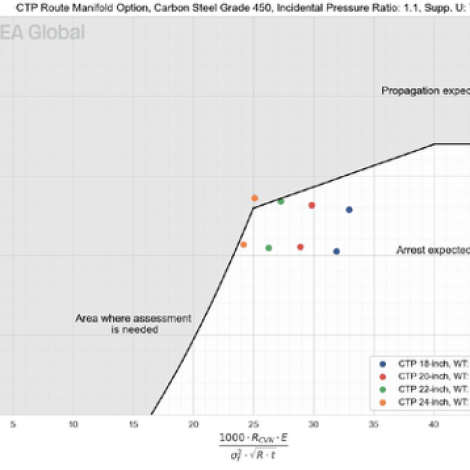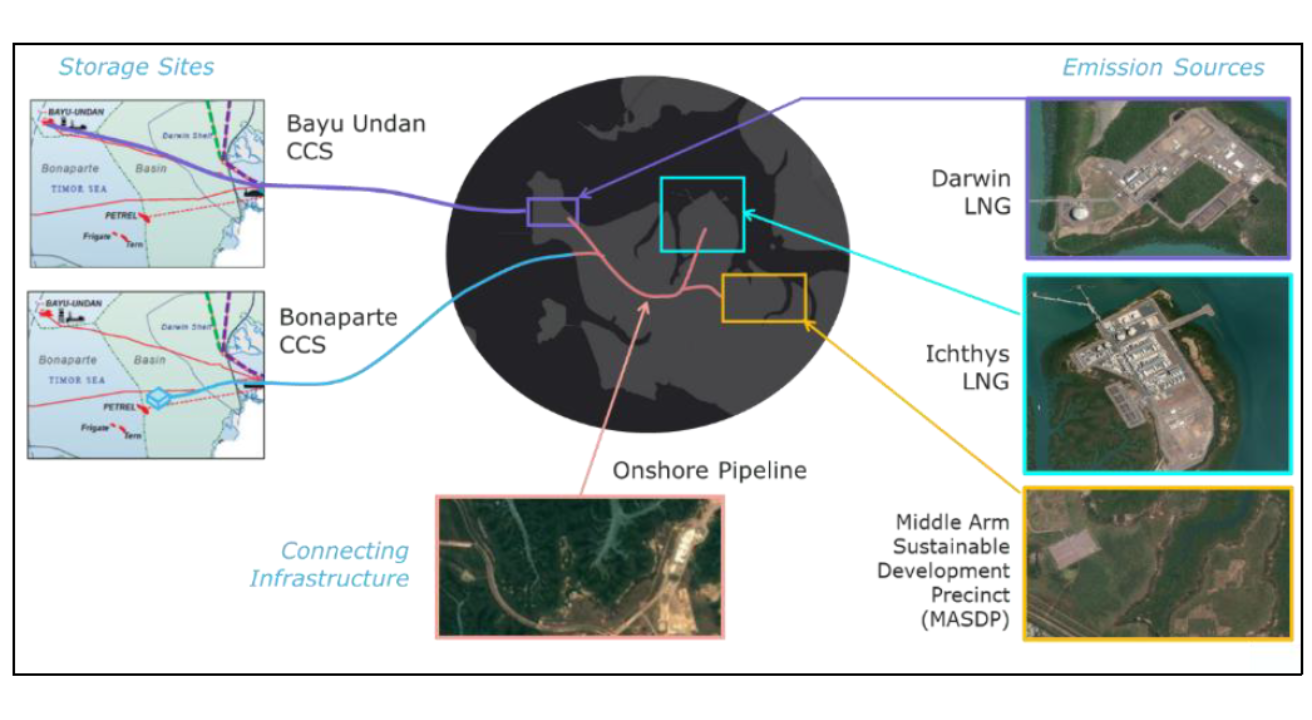
SEA Global executed the Pre-FEED engineering services for the offshore development, focusing on dense phase CO2 transport across a 260 km long carbon steel pipeline.
The work covered mechanical engineering for wall thickness, on-bottom stability, spans, and expansion risk using the SEA ICE platform. The scope also involved pipeline route optimization to minimize geotechnical risks, shore crossing design to ensure minimal environmental impact, and subsea structural designs for manifolds, PLETs, pig launchers/receivers, and tie-in spools. Additionally, the team analyzed long-distance subsea power and communications, conducted material selection and corrosion modeling for allowable impurity ranges, performed flow assurance assessments to maintain dense phase conditions, and established infield architecture based on functionality and intervention limits.
Pipeline Type
Dense phase CO2 transport
Pipeline Length
260 km
Pipeline Diameter
20-inch
Operating Pressure
22.0 MPa
Capacity Flowrate
540 MMscfd
Scope of Work
Pipeline Design
Mechanical engineering for pipeline wall thickness, on-bottom stability, pipeline spans, buckling and expansion risk, using SEA ICE platform.
Pipeline Route Selection
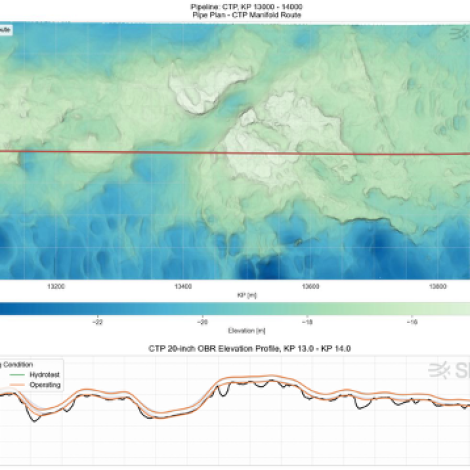
Optimisation of pipeline route to minimize geotechnical risks and reduce third party interaction, construction complexity and cost. Support for the Geological and Geophysical survey.
Structural Design
Subsea structure design for the manifold, PLET’s, subsea pig launcher and receiver, and the jumpers and tie-in spools.
Powers and Communications
Long distance power and communication system analysis and design, including the distribution subsea.
Shore Crossing Design
Shore crossing design and selection for a solution with minimal environmental impact and minimal construction complexity.
Materials Selection and Corrosion
Material selection and corrosion assessment completed for a range of process conditions. Developed a CO2 composition specification for allowable ranges of impurities.
Flow Assurance
Steady state and transient flow assurance assessments to optimize line size and ensure the transport of CO2 remains in dense phase throughout the life of the field.
Infield Architecture Design
Infield architecture selection based on functionality, constructability, operations and intervention limitations.